
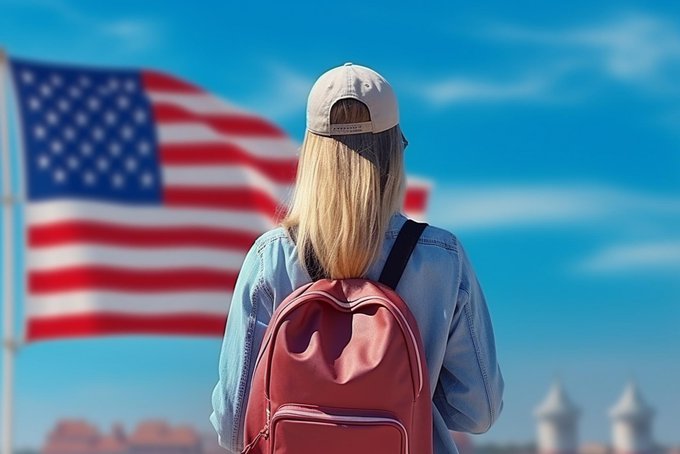
Secondary education in the US is a system that families often choose not just for the diploma, but to pave the way to an American or international university. Schools here operate on the K–12 model, where the upper stage spans four years, from ninth through twelfth grade. For international students, this opportunity usually begins at age fourteen or fifteen, when there's time to adapt, earn academic credits, and build a portfolio that admissions committees will understand.
The main feature of the American high school is that there's no single compulsory set of subjects. Students earn credits by choosing courses based on their interests and level of difficulty. The compulsory minimum — English, mathematics, science, history — is supplemented by electives, from economics and journalism to engineering and psychology. For those ready for a workload above average, there are Honors and Advanced Placement courses, and at some schools — the International Baccalaureate programme. This flexibility allows students to build a programme tailored to specific university requirements rather than a one‑size‑fits‑all standard.
This system offers several things that are hard to find in schools with a fixed curriculum. First and foremost, students get used to a format where not just the final grade matters, but also the difficulty of their courses, their extracurricular involvement, and their ability to manage their own workload. At most schools, from ninth grade, a personal college counsellor begins working with the student. They help compile a list of universities, plan exams, review essay drafts, and prepare for interviews. This support is built into school life rather than left to the family.
A unique feature of American private schools, especially boarding schools, is direct access to universities. Representatives of leading institutions, including Harvard, Yale, MIT, and Stanford, regularly visit campuses, give presentations, and conduct interviews. This isn't a guarantee of admission, but it gives students more information and experience with admissions committees than most applicants from abroad ever get.
Who This Suits. Primarily those who see an American bachelor's degree as their main goal. Studying at a US high school doesn't replace a university application, but it places students within a system that admissions committees understand: a standard transcript, recommendations from teachers accustomed to writing such letters, and a counsellor with the right connections. This option is also chosen by families where the child is ready for independent life on campus and wants to develop independence earlier than would happen in their home system. For those looking for a short‑term experience, there's a one‑year exchange on a J‑1 visa, but it doesn't lead to a diploma and is limited in duration.
Admission requirements vary by type of school. Public schools on an F‑1 visa accept international students only in the upper grades and for no more than twelve months, with full tuition payment. Private schools, including boarding schools, can accept students for the entire duration of the programme and issue an F‑1 visa for several years. The minimum age for entering high school is usually fourteen, and most schools don't accept students directly into twelfth grade, so that the student has time to earn the required credits.
Academic requirements include a transcript covering two to three years, with a translation and a GPA that varies by school. A language exam is mandatory: TOEFL iBT from 60–75 for basic schools and from 80–100 for stronger ones, or IELTS with equivalent scores. Many private schools require the SSAT — a test assessing mathematics, reading, and writing. For top boarding schools, competitive scores are in the range of 2200–2300+ (80–90+ percentile). Additionally, recommendations from mathematics and English teachers, essays from the student and parents, and an interview are required, which most often takes place online or during a visit to the school.
Another important point is financial capacity. To obtain an F‑1 visa, the family must confirm they can cover tuition and living expenses. At private boarding schools, the full annual cost reaches $60,000–$75,000, including campus accommodation and meals. For public schools on an F‑1 visa, payment is calculated according to the local per‑capita rate and is made before submitting visa documents.
Secondary education in the US isn't a universal solution — it's a tool for a specific goal. It provides structure and context that strengthen a university application but don't replace the student's personal achievements. The decision makes sense when it's based on the child's readiness for independence, their English level, and the family's willingness to invest in a long‑term process — not just in getting in.